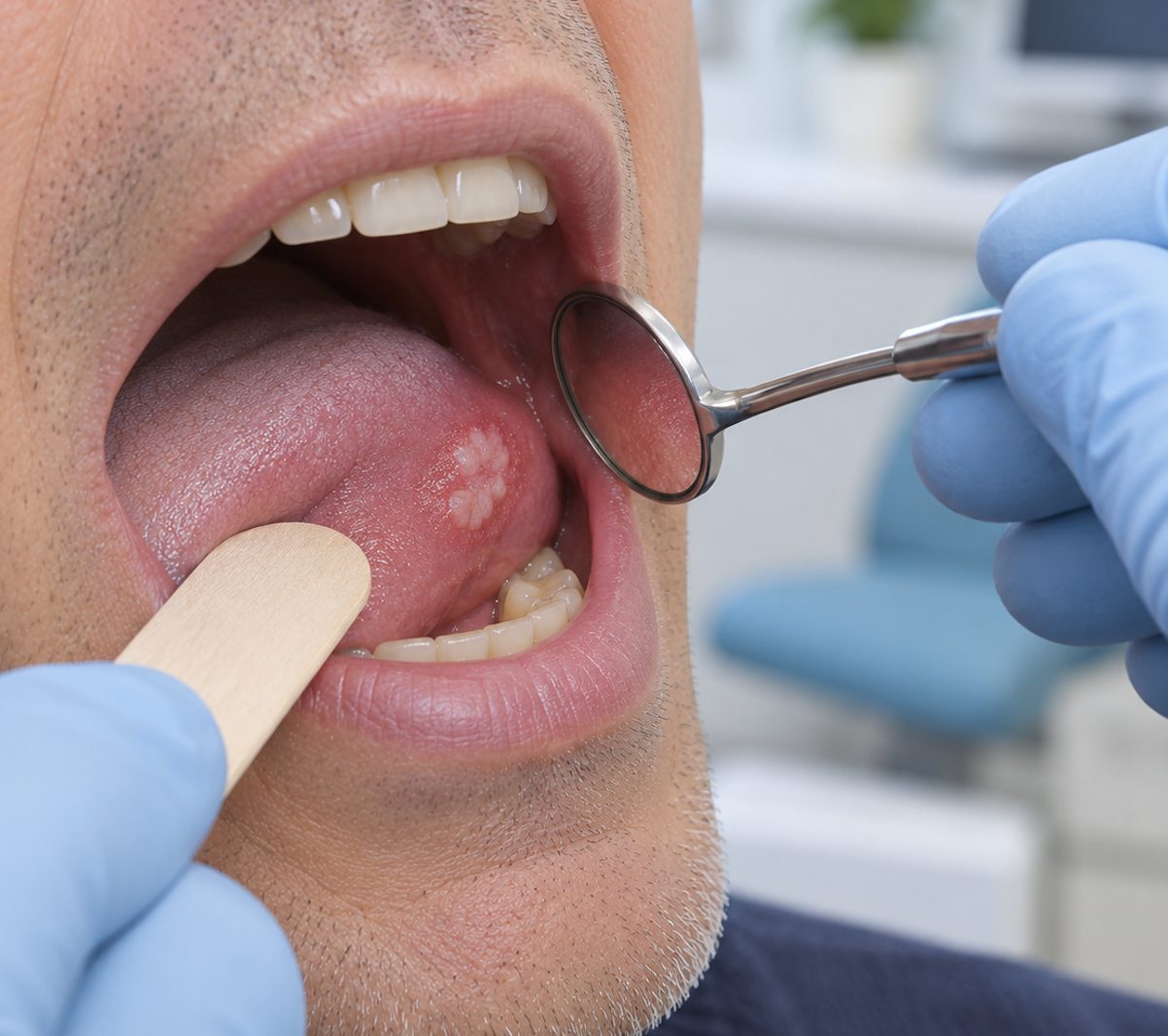
A mouth ulcer that keeps catching on your teeth. A white patch you’ve only just noticed. A small lump that doesn’t hurt, but hasn’t gone away.
It can be tempting to put these changes down to irritation and wait for them to settle. And most often, there is a non-cancerous explanation. However, persistent or unexplained changes deserve a professional assessment.
November is Mouth Cancer Action Month, the Oral Health Foundation’s annual campaign encouraging people to recognise possible warning signs and seek advice. Its message is relevant to everyone: get to know what is normal for your mouth, and have unusual changes checked.
For Mr Ross Elledge, Consultant Oral and Maxillofacial Surgeon, this connects directly with an important part of his practice: investigating oral medicine concerns and helping patients access the right care.
What are the signs of mouth cancer?
Mouth cancer can affect areas including the tongue, gums, lips and lining of the cheeks. Symptoms are not always dramatic.
Changes that should prompt an appointment with a dentist or GP include:
• A mouth ulcer lasting more than three weeks.
• A red or white patch inside the mouth.
• A lump in the mouth, on the lip or in the neck.
• Mouth pain that does not settle.
• Difficulty swallowing or speaking.
• Persistent hoarseness.
It’s obviously important to note that these symptoms can have other causes. Having one does not mean you have cancer, but an examination is important. Finding cancer earlier may make it easier to treat.
Does every mouth ulcer need investigating?Not every ulcer requires specialist tests. But an ulcer that remains in the same place and has not healed after three weeks should be checked, even if you think a tooth or denture may be rubbing against it.
The three-week message is a useful reminder – not an instruction to wait if something is changing, worsening or worrying you. A new lump or unexplained red or white patch also warrants assessment.
Try to note when you first noticed the change and whether it has grown, bled or become uncomfortable. That history can help your clinician understand what is happening.
What could a white or red patch mean?
A patch is an appearance, rather than a diagnosis. Mr Elledge’s oral medicine practice includes assessing conditions such as lichen planus, infections, recurrent ulceration and persistent white or red patches. Some changes can be managed with treatment or monitoring; others need further investigation.
A persistent white patch may be described as leukoplakia once other explanations have been excluded. Its appearance alone cannot reliably establish whether abnormal cell changes are present.
That is one reason a clinician may recommend a biopsy. Learn more about white patches and leukoplakia.
Searching photographs online can be misleading. Different conditions may look similar, while a photograph cannot show everything a clinician assesses during an examination.
What happens when you get a mouth change checked?
Your dentist or GP will ask about the symptoms and examine your mouth. They may also feel your jaw and neck. Depending on the findings, they may arrange a specialist referral.
An urgent referral means the concern needs timely investigation; it does not confirm a cancer diagnosis.
Where a biopsy is appropriate, a small tissue sample is taken for laboratory examination. Further tests, including scans, may be needed depending on the findings. Your clinician should explain what is being investigated and how you will receive the results.
Before leaving an appointment, make sure you understand the next step: treatment, review, biopsy or referral. If you are asked to return for monitoring, keep that appointment even if the area is not painful.
Can mouth cancer affect people who do not smoke?
Yes. Smoking and chewing tobacco increase risk, as does drinking a lot of alcohol, but the absence of these habits does not rule out mouth cancer.
Other recognised factors include chewing betel nut or paan, a weakened immune system and certain existing mouth changes. Some cancers are also associated with particular types of human papillomavirus, or HPV. Stopping tobacco use and reducing alcohol intake can lower risk, although mouth cancer cannot always be prevented. Whatever your age or lifestyle, persistent symptoms should be assessed.
What can you do this Mouth Cancer Action Month?
Use November as a prompt to pay attention to your oral health.
Keep up with dental appointments and mention changes affecting the tongue, cheeks, gums or lips, as well as concerns about your teeth. If something looks or feels different, make a note of it and arrange advice rather than repeatedly checking photographs online.
Knowing your own mouth can help you notice a change, but a home check cannot rule out disease or replace a professional examination.
Most importantly, do not postpone an appointment because you are frightened of what you might hear. Assessment is how you move from uncertainty towards an explanation and a plan.
Oral medicine assessment with Mr Ross Elledge in Birmingham
Mr Ross Elledge assesses a range of oral medicine conditions in Birmingham, including ulcers, patches and other unexplained changes in the mouth.
His role includes initial assessment, appropriate investigation and referral. He does not provide definitive treatment for oral or oropharyngeal cancer; where this is suspected or diagnosed, care is directed to the appropriate specialist head-and-neck cancer team.
If you have a persistent mouth change, contact your dentist or GP promptly. You can also enquire about oral medicine assessment at Elledge Surgical, without delaying any urgent referral already arranged.
This November, take a persistent ulcer, unexplained patch or lump seriously enough to get it checked.