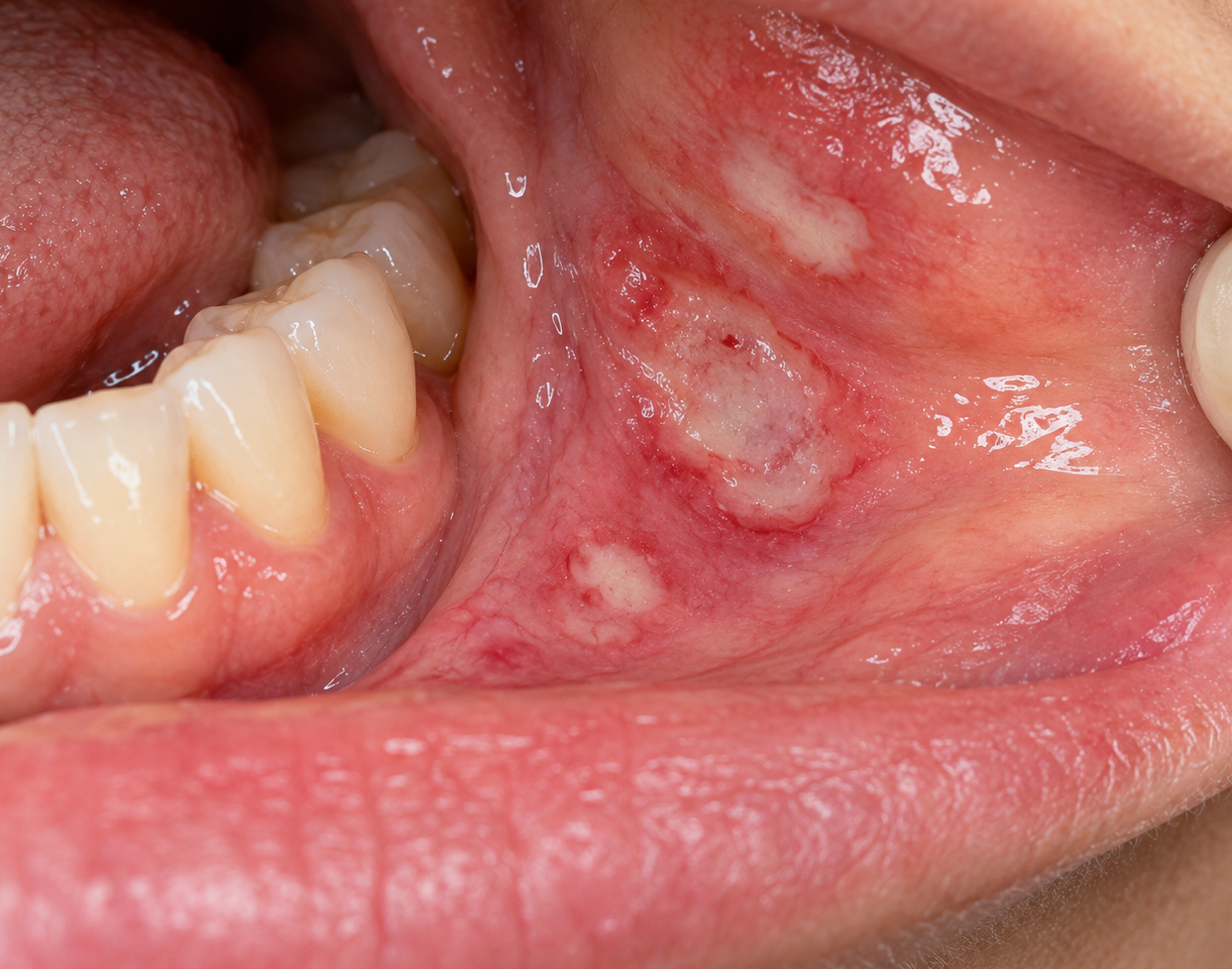
Hearing that you need a biopsy can be unsettling. Perhaps your dentist has noticed a white patch inside your cheek, an ulcer that has not healed or a small lump on your tongue. You may have had no pain and no idea anything needed investigating.
Being referred for a mouth biopsy does not mean you have cancer. A biopsy is a way of finding out what a change in the mouth actually is. It can help diagnose inflammatory conditions, identify benign tissue changes and check for abnormal cells that may need treatment or monitoring.
The recommendation means that a closer look is needed – not that the result is already known.
What is a mouth biopsy?
A mouth biopsy, also called an oral biopsy, involves removing a small piece of tissue so it can be examined under a microscope.
The sample is assessed by a pathologist, a doctor who studies tissue to help diagnose disease. This provides information that cannot always be obtained simply by looking at the surface of a patch, ulcer or lump.
Depending on the size and nature of the area, your clinician may take a sample from it or remove the whole small lesion. The approach should be explained before you consent to the procedure.
Why might a dentist recommend one?
Different conditions can look similar inside the mouth. A white patch, for example, is a description of an appearance rather than a diagnosis.
- Possible explanations include irritation, inflammatory conditions such as oral lichen planus, or changes that require closer monitoring. Some persistent white patches are described as leukoplakia once other explanations have been excluded.
- A biopsy may help distinguish between these possibilities and determine whether abnormal cell changes, known as dysplasia, are present. Dysplasia is not the same as invasive cancer, but its presence can affect the advice about treatment and follow-up.
Not every mouth change needs a biopsy. The decision depends on its appearance, duration, location and the findings of an examination.
Can a painless patch still need checking?
Yes. Pain is not a reliable way to judge whether a mouth change needs assessment.
Some inflammatory conditions cause considerable soreness, while other changes may be painless. For example, oral lichen planus can produce white, lace-like markings with little discomfort, although red or ulcerated areas may be painful.
A dentist may therefore recommend investigation even when you feel well. This is one reason routine dental examinations are valuable: they include looking at the soft tissues of the mouth, not just the teeth.
Does a mouth biopsy hurt?
Most small oral biopsies are performed using local anaesthetic. You remain awake, but the area is numbed before the tissue is taken.
The injection may briefly sting. During the procedure, you may notice pressure or movement, but you should tell the clinician if you feel pain so they can respond.
The wound is often closed with dissolving stitches, although this depends on the site.
Mr Elledge usually schedules a 30 minute appointment for your biopsy – but the actual procedure takes no longer than 10 minutes. The remainder of your appointment time is spent completing paperwork and going through post-operative instructions, ensuring that there is plenty of time for any questions or concerns and nothing feels rushed.
How should you prepare?
Bring an up-to-date medication list and tell your clinician about allergies, bleeding problems and any medicines that affect blood clotting.
Do not stop prescribed medication unless the treating team specifically tells you to. Follow the instructions supplied for your appointment, including any advice about eating, drinking and travelling home.
It’s also worth writing down your questions. You might want to ask what the biopsy is investigating, whether the whole area will be removed and how you will receive the result.
What is recovery like?
Some soreness is expected after the anaesthetic wears off. The amount varies with the size and position of the biopsy.
Your team will explain how to keep the area clean, what to eat and which pain relief is suitable. While your mouth is numb, take care to avoid biting your lip or tongue and burning yourself with hot food or drinks.
Follow your own postoperative instructions rather than advice intended for a different procedure. Contact the treating team if bleeding does not settle with the measures they recommend, or if you develop increasing swelling, worsening pain or signs of infection.
What happens when the results arrive?
The result is considered alongside the examination and your symptoms. It may lead to reassurance, treatment for an inflammatory condition, ongoing monitoring or further investigation.
Occasionally, additional sampling or referral to another specialist team is needed. Ask when the result is expected and whom to contact if you have not heard; waiting times vary, and a delay alone does not tell you what the result will be.
If cancer is identified, the appropriate head-and-neck cancer team should take over the relevant treatment pathway.
Oral medicine assessment in Birmingham
Mr Ross Elledge’s practice includes assessment of oral medicine concerns such as persistent patches, ulcers and other changes affecting the mouth. Where appropriate, investigation can include a biopsy and referral to colleagues for further care.
An unexplained mouth ulcer lasting more than three weeks, a red or white patch, or a persistent lump should be checked by a dentist or GP. These symptoms can have several causes, but should not be ignored.
For information about assessment in Birmingham, visit Elledge Surgical’s oral medicine service or contact the practice.