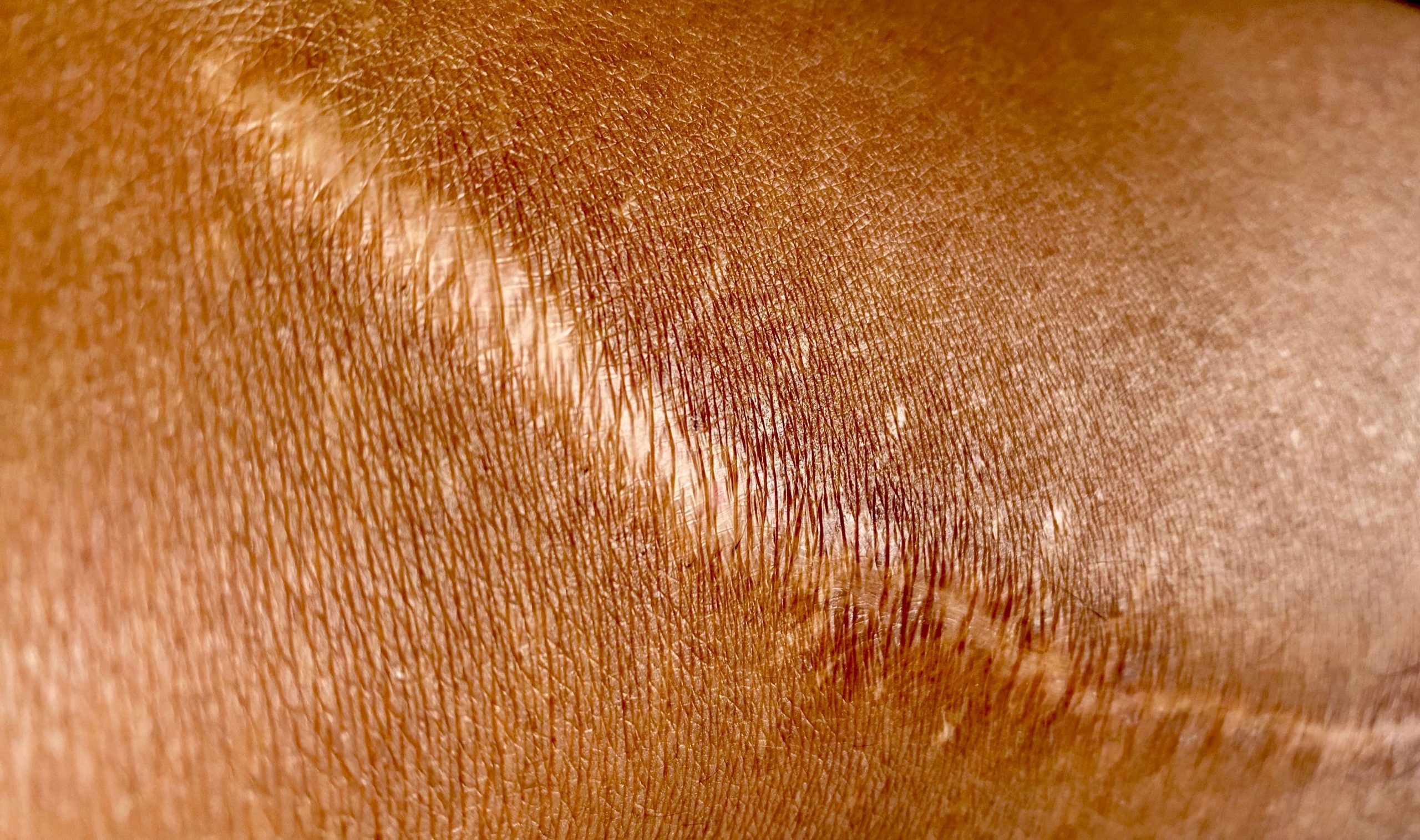
Scars are a natural part of the body’s healing process after an injury to the skin, whether it’s an accident or an operation. While many scars gradually soften and become less noticeable over time, others remain raised, uneven or more visible than expected.
For some people, a scar can become an inconvenience or a source of insecurity, and understanding the type of scar you have is an important first step when considering treatment options. Scar revision surgery might be considered for certain scars that are causing aesthetic or functional concerns. While you can’t completely remove a scar, surgery can help it blend more naturally with the surrounding tissues.
At Elledge Surgical, every scar is assessed individually to understand the cause of the concern and determine the most appropriate approach.
Why Do Some Scars Become More Noticeable?
When the skin heals after an injury or surgery, the body quickly produces collagen to repair the damaged area. This healing process creates a scar, but the final appearance can vary significantly from one person to another, and from one scar to another.
Some scars become flatter and less noticeable over time, while others may remain thicker, raised or more prominent. Factors that can influence how a scar develops include its location, the healing process, the type of injury or procedure, and the way the body forms scar tissue.
A scar might become more noticeable if it’s raised, wider than expected, uneven in shape or doesn’t sit naturally with the surrounding skin. Understanding why a scar looks the way it does helps determine whether scar revision surgery or another treatment approach may be suitable.
What are the Different Types of Scars?
There are several types of scars, each with distinct characteristics. Although all scars form as part of the normal healing process, some develop in ways that make them more noticeable.
Surgical Scars
A surgical scar is the expected result of an incision made during an operation. In many cases, surgical scars are fine-line scars that gradually flatten and fade over time, making them less noticeable. They don’t often need treatment, and a surgeon can provide advice on the best way to care for the scar during your recovery.
However, some surgical scars can remain more noticeable due to their position, tension on the skin or the way the wound has healed. In some cases, scar revision surgery might be considered to improve the appearance or address issues with the surrounding tissue.
Hypertrophic Scars
A hypertrophic scar is a raised scar that stays the same size as the original wound. These scars develop when the body produces an increased amount of scar tissue during healing.
They can appear thicker, firmer or more prominent than expected. Some might also cause discomfort or tightness, particularly if they develop in areas where the skin needs to move. Treatment options depend on the individual scar and the concerns it is causing.
Keloid Scars
A keloid scar is a type of raised scar that is bigger than the original wound. Unlike most other scars, keloids can continue to grow over time and usually don’t flatten or fade on their own. Some people are more likely to develop keloid scars than others, depending on age and skin type.
Since keloid scars behave differently from other types of scars, they require careful assessment and treatment planning. Keloid scar surgery might be considered in selected cases, although this approach needs to take into account the possibility of recurrence.
Can Scar Revision Surgery Improve an Old Scar?
Many assume that an old scar can’t be changed, but this isn’t always the case. Depending on the type of scar, its location and your concerns, scar revision surgery might help improve the appearance of an existing scar.
However, the aim of scar revision is improvement rather than complete removal. A successful result usually involves making a scar less noticeable, whether that’s a flatter shape, a finer appearance, a less distracting position, or better blending with the surrounding skin. Often, the smallest difference can have a significant impact on someone’s confidence.
Is Scar Revision Surgery Suitable for Every Scar?
Scar revision surgery isn’t always the right option for every type of scar. The best treatment depends on the scar and the reason it’s become a concern. For example, a scar caused by excessive scar tissue might require a different approach than a scar that’s poorly positioned or affects the movement of surrounding tissue.
In some cases, non-surgical treatments might be recommended either instead of surgery or alongside. These can include options such as steroid injections, topical medications, dressings, dermabrasion, LASER or other specialist treatments, depending on the individual situation. A consultation allows the underlying cause of the scar problem to be assessed and helps determine the most appropriate treatment plan.
What Results Can Patients Expect From Scar Revision?
One of the most important things to understand about scar revision surgery is that it’s intended to improve the scar rather than make it disappear completely. Every surgical procedure creates some form of scarring, so the goal is to create the best possible scar, which is often the smallest and most discreet. This may involve making the scar less noticeable by improving its position or helping it blend more naturally with the surrounding skin.
The final result can depend on several factors, including the size and shape of the original scar, the treatment approach used and the way a patient heals. Having a realistic understanding of what can and can’t be achieved is an important part of deciding whether scar revision surgery is right for you, or whether other treatments might be more effective.
Choosing the Right Scar Treatment
If you’re unhappy with the appearance of a scar, the first step is to look at the reason behind the problem. A keloid scar and hypertrophic scar might look different, and require different approaches to improve the appearance or function of the surrounding tissue.
At Elledge Surgical, all scar concerns are assessed on an individual basis. The focus is on understanding your goals, assessing the scar and recommending a treatment approach that provides the best opportunity for improvement. Scar revision surgery can be an effective option for selected patients who want to improve the appearance of an existing scar, but the right approach depends on the specific circumstances.
With over 20 years of expertise, Mr Ross Elledge focuses on achieving optimal aesthetic outcomes for patients. However, he won’t automatically jump to offer a surgical solution and instead works with a multidisciplinary team to consider non-surgical options whenever appropriate. Whether re-orienting, re-excising or refashioning scars, at Elledge Surgical, we strive for a natural-looking improvement while providing realistic expectations.
To learn more about how we can assist with your scar, don’t hesitate to contact us today for a consultation.