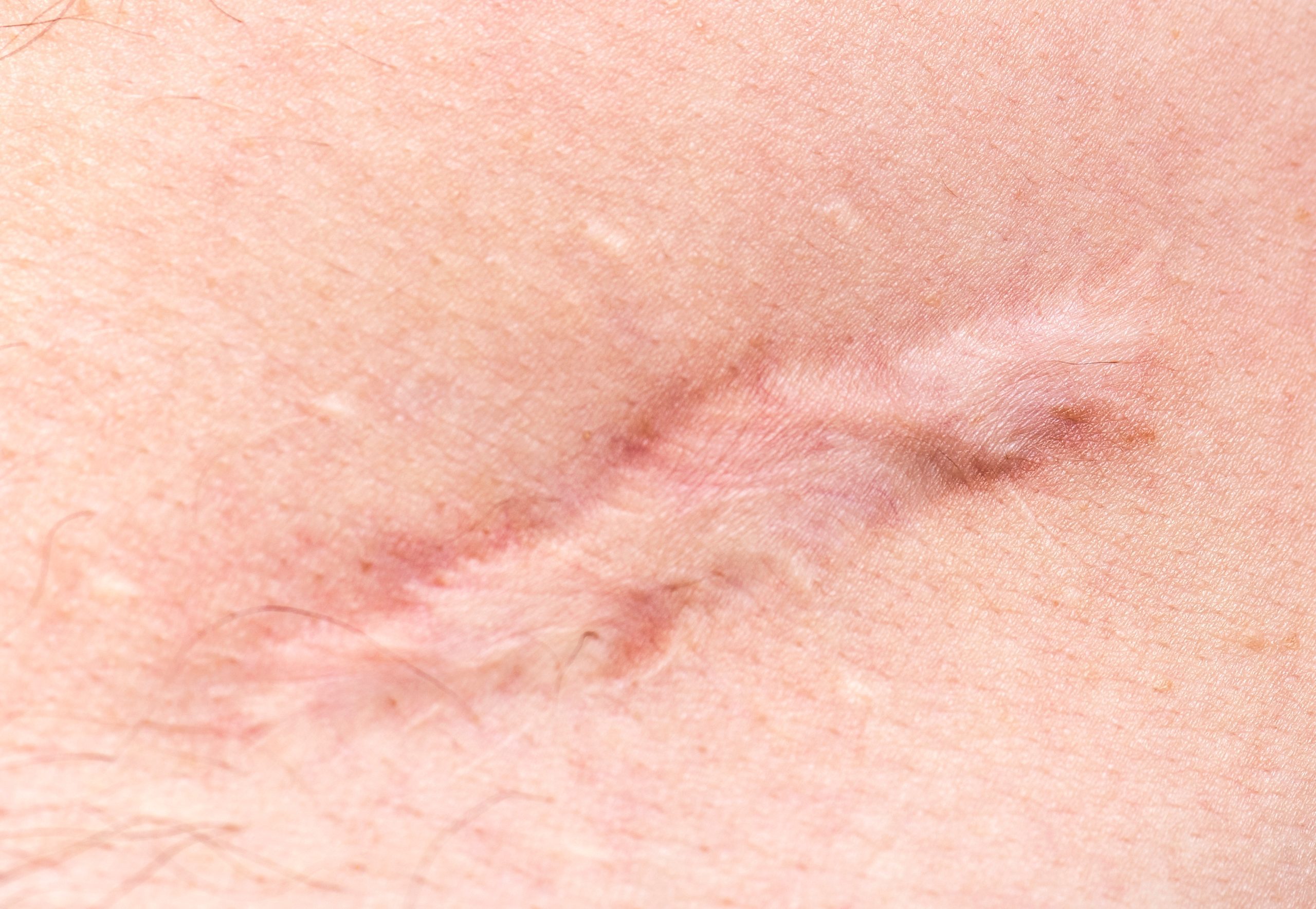
Scars can be a lasting reminder of previous surgery, injury or trauma. For some, they will settle over time and become much less noticeable. For others, they remain raised, red, lumpy, or eye-catching, especially when on the face or neck.
When a scar affects how someone feels about themselves, scar revision surgery might be recommended. This surgery is designed to improve the appearance, texture or position of an existing scar so it blends better with the surrounding skin. At Elledge Surgical, Mr Ross Elledge uses his experience in skin cancer surgery, reconstruction and cosmetic surgical techniques to help patients achieve a better scar where possible.
Why do Scars Form?
A scar forms as part of the body’s natural healing process after the skin has been injured. This might happen after an accident, facial trauma, skin cancer surgery or another previous operation. The body repairs the wound by producing new tissue, but this can look different from one person to another.
Some scars heal as fine, pale lines. Others can be more noticeable because of how the body heals, where the scar sits, or how the skin has been repaired. Mr Elledge has helped patients who are unhappy with a scar for several reasons, including keloid or hypertrophic scarring, where the scar appears red, raised or lumpy. A scar might also be more visible if it’s in an unfavourable direction, crosses natural areas of the face, or creates a mismatch in colour.
During a consultation, Mr Elledge will discuss this with you to help decide whether scar revision surgery is the best option or if another treatment is more suitable.
Which Scars Respond Well to Revision?
Scar revision surgery can be suitable for scars caused by surgery or trauma, particularly when the scar has healed in a way that impacts the appearance of the face or neck. Scars that are raised, red, lumpy, poorly aligned, mismatched in colour, crossing anatomical subunits, or visually prominent might benefit from professional assessment.
Some scars can be improved by changing their direction so they sit more naturally next to surrounding features. Others might be improved by refashioning the scar, which means carefully removing the existing scar tissue and repairing the area again. In some cases, the issue might not only be the scar itself but also the surrounding contour, volume, or skin quality.
It’s important to remember that not every scar will need surgery. Mr Elledge doesn’t automatically jump to a surgical solution. Where appropriate, non-surgical options might be recommended first, often with input from a dermatology team. This approach helps ensure that treatment is guided by what’s most suitable for the individual scar.
Surgical vs Non-Surgical Options
Scar revision can involve a range of surgical and non-surgical techniques. The right option depends on the type of scar, how it has healed, and what the patient hopes to improve.
Surgical options may include reorienting the scar using techniques such as z-plasties or similar approaches. This can help reposition a scar so it sits more favourably within natural lines of the face. Another option is to re-excise and refashion the scar, creating a new scar that aims to produce a better final result.
Non-surgical treatments can also play an important role. Mr Elledge often explores options such as laser treatment, topical medications and dressings, intralesional steroid injections, dermabrasion, fat grafting, and dermal fillers. These treatments might be used on their own or alongside surgery, depending on what the scar needs.
Whenever appropriate, non-surgical solutions will be explored first with a multidisciplinary team.
Realistic Expectations (“Better, Not Invisible”)
One of the most important things to understand about scar revision surgery is that the goal is improvement, not perfection. A scar can’t be made completely invisible, even with careful surgery and good healing. Ultimately, the body still has to repair the area, and that healing process will leave some form of mark.
A realistic aim is a better-looking scar. That might mean a flatter appearance, a finer line, a less distracting position, an improved contour or a result that blends more naturally with the surrounding skin. For many patients, even a subtle improvement can make the scar feel less obvious and much easier to live with.
This is particularly important for facial scars, where small details can make a noticeable difference. A scar that “draws the eye” might feel more prominent because of its direction, shape or impact on surrounding features. Scar revision surgery can sometimes help reduce the visual distraction, but each case needs to be assessed individually.
Recovery and Results
Recovery after scar revision surgery depends on the treatment and the area. A small scar revision might have a quicker recovery process than a more complex correction involving a secondary deformity. Non-surgical treatments might also involve different aftercare compared with surgery, and Mr Elledge will clearly explain what to expect.
Patients should also expect the new scar to change gradually as it heals. Scars often look more noticeable in the early stages, before they settle over time. Dressings, topical treatments or other supportive therapies might be recommended where suitable. In some cases, more than one approach is needed to achieve the best possible improvement.
The final result can depend on factors such as skin type, scar type, location, healing response and aftercare too. A careful consultation helps set clear expectations from the very beginning, so patients understand what scar revision surgery can and cannot achieve.
Contact Elledge Surgical
If you’re unhappy with an old scar from trauma or previous surgery, Elledge Surgical can assess whether scar revision surgery or a non-surgical option might be suitable. Mr Elledge has extensive experience and devotes considerable time to achieving optimal aesthetic outcomes for patients. With additional training in cosmetic surgery, he is often called on to provide scar revision surgery, and patients have been delighted with the results.
To find out more about how Mr Elledge can support you with scar revision surgery and secondary deformity correction, don’t hesitate to get in touch today.